Mold Remediation During a Remodel in Vancouver, WA: 2026 Cost & Process Guide
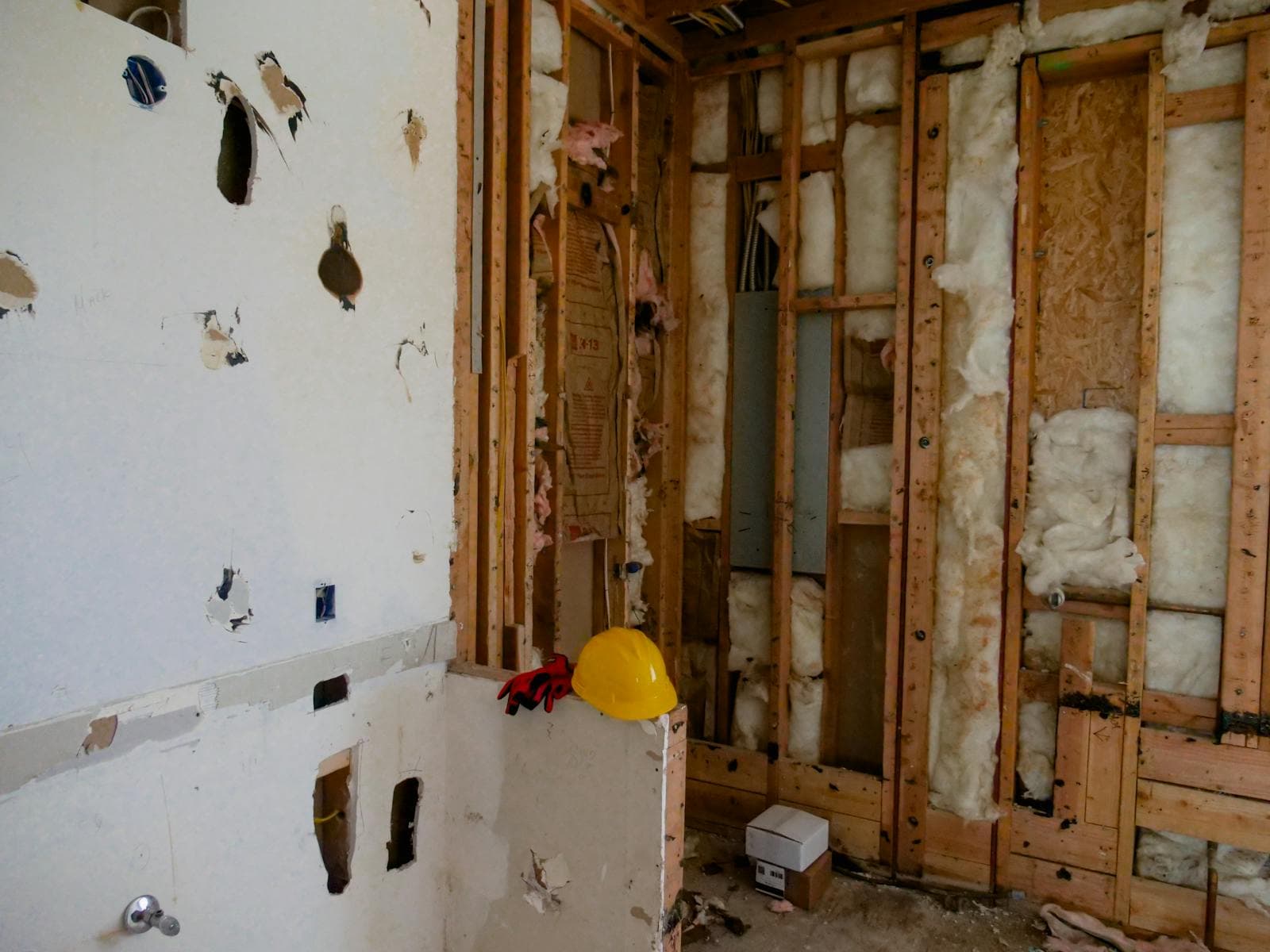
Mold remediation cost in Vancouver, WA runs $500 to $8,000+ during a remodel in 2026, depending on the affected area, the location of the mold, and whether HVAC, framing, or finished surfaces are involved. Most kitchen and bathroom remodels on Clark County homes built before 2000 turn up at least one pocket of mold once walls are open, so plan a line item before demo rather than a change order after.
The Pacific Northwest is a mold magnet. Vancouver, WA averages 42 inches of rain a year per the National Weather Service Portland-Vancouver station, with relative humidity above 75 percent for nearly half the year. That climate, combined with vented crawl spaces, original-builder bathroom fans, and the cellulose- paper drywall in nearly every home built since 1960, gives mold colonies the temperature, moisture, and food source they need to grow undetected behind finished surfaces. Clark County indoor air quality complaints to Washington Department of Health regional offices have trended up year over year since 2019.
This guide covers 2026 Vancouver remediation pricing by scope, the IICRC S520 process every legitimate contractor follows, how to fold remediation into a kitchen, bath, or whole-home remodel without blowing the timeline, and Washington-specific insurance and disclosure rules that affect your decisions before demo starts.
TL;DR
Mold remediation in Vancouver, WA (2026): small jobs under 10 sq ft run $500–$1,500; mid-sized 10–30 sq ft jobs run $2,000–$4,500; whole- room or crawl space jobs with HVAC cleaning run $5,000–$8,000+. Testing before demo costs $300–$700. Reputable contractors follow IICRC S520 with HEPA-filtered containment, antimicrobial treatment, and a third-party clearance test. Insurance typically pays only for sudden and accidental water losses, not chronic humidity. Always remediate before rebuild, not after.
Found Mold During a Remodel?
Our team works with IICRC S520 certified remediation partners across Vancouver, Hazel Dell, Orchards, and Camas. We coordinate testing, containment, and rebuild so your kitchen, bath, or whole-home project does not sit idle while remediation runs. Free estimates with a written remediation line item.
Request a Free EstimateMold Remediation Cost Overview for Vancouver, WA Remodels (2026)
Pricing on a Vancouver remodel varies with three variables: the square footage of contaminated material, the location of the mold (drywall is cheap, framing and HVAC are not), and the IICRC S520 condition class your remediator assesses. Condition 2 (settled spores from another area) is cheaper than Condition 3 (active growth) because Condition 3 requires full containment, HEPA-filtered negative air, and material removal rather than cleaning.
Below are typical 2026 Clark County price ranges from IICRC S520 certified remediation contractors, plus the pre-remodel testing and post-remediation clearance fees most homeowners forget to budget.
Typical Mold Remediation Costs by Scope — Vancouver, WA Remodel (2026)
Sources: IICRC S520 certified remediation contractor quotes, Clark County remodeler estimates, Washington indoor environmental professional fee schedules (2026).
Two patterns drive cost variance more than anything else. First, mold on framing or sheathing roughly doubles per-square-foot pricing because lumber requires encapsulation or removal rather than wipe-down. Second, HVAC contamination — spores carried through return lines into rooms not part of the original water event — can triple the scope. Both happen routinely on pre-2000 Vancouver homes with finished basements or unsealed crawl spaces.
For a wider view of older-home renovation surprises that often turn up alongside mold, see our guide to hidden costs of remodeling a pre-1990 home in Vancouver, WA.
Why Vancouver, WA Homes Hide Mold
The Pacific Northwest gives mold everything it needs. Three site conditions show up over and over on Clark County remediation jobs:
- Crawl space moisture. Most Vancouver homes built before 2010 sit on vented crawl spaces. Vents draw in cool, humid PNW outside air; that air contacts cooler subfloor framing and condenses, feeding mold on joists and the underside of the subfloor.
- Underpowered or vented-into-attic bathroom fans. Original-builder bathroom fans on pre-2000 homes often vent into the attic instead of out the roof, and many run at 50 CFM or less when code-current minimums are 80 to 100 CFM. Result: moisture stays in the bathroom or migrates into the attic where it lands on cold sheathing.
- North-facing siding and window flashing failures. Wind-driven Vancouver winter rain pushes against north and west exposures hardest. When siding flashing fails or window pans leak, water travels behind the weather barrier and saturates wall sheathing for years before it shows up indoors.
Why Mold Loves Vancouver: Monthly Avg. Relative Humidity (NWS Portland-Vancouver, 2026)
Source: NOAA / National Weather Service Portland-Vancouver climate normals, 30-year period.
The 70 percent relative humidity threshold matters because mycology research consistently shows mold spore germination accelerates above that level on cellulose- rich surfaces. Drywall paper, framing lumber, MDF trim, and untreated cabinet boxes all qualify. For nine months of a typical Vancouver year, indoor air without mechanical dehumidification sits in the danger zone for any surface kept below indoor air temperature, including exterior walls without continuous insulation.
This is also why PNW-appropriate remodeling materials matter so much on a Vancouver project. Mold-resistant drywall (paperless), cement board substrates, and rigid-foam continuous insulation are not premium upgrades in the PNW — they are the floor for durable construction in a climate that tries to grow mold for most of the year.
Testing Before Demo: When, Why, and What It Costs
Pre-demo mold testing is not legally required in Washington, but it is strongly recommended whenever any of the following are true: a known past leak, a finished basement, a vented crawl space with bulk water, an original-builder bathroom older than 15 years, or any visible staining on walls, ceilings, or trim. A test by a certified indoor environmental professional runs $300 to $700 in 2026 and includes lab analysis identifying species and spore counts.
Three test types and when to use each
- Surface (tape lift) sampling: $50 to $100 per sample. Best when visible discoloration is present and you need species identification before deciding scope.
- Air sampling (spore trap): $300 to $500 for a typical 2–3 sample residential set. Best when nothing is visible but indoor air quality symptoms (allergies, respiratory irritation) suggest a hidden source. Outdoor control sample establishes baseline.
- ERMI (DNA-based) testing: $300 to $500. A composite dust sample analyzed for 36 mold species genetic markers. Useful as a whole-home screen but not specific enough to scope a remediation project alone.
Skip the home depot DIY petri dish kits. They produce high false-positive rates, do not identify species, and no Washington insurance carrier or remediation contractor will accept them as documentation.
Pro Tip
Hire your indoor environmental professional separately from your remediation contractor. Some Washington remediation outfits offer free testing in exchange for a remediation contract; that conflict of interest biases scope upward. A $400 independent test by a Washington Department of Health-recognized inspector pays for itself in scope clarity and gives you leverage if you want a second remediation bid.
The IICRC S520 Remediation Process
IICRC S520 is the industry consensus standard for professional mold remediation. Every reputable Vancouver-area remediation contractor follows it, and most Washington homeowners insurance carriers require S520-compliant work to honor a mold-related claim. The six-step sequence on a typical Clark County remodel:
- Assessment and condition class.Certified inspector documents the affected area and classifies the project as Condition 1 (normal fungal ecology), 2 (settled spores from another area), or 3 (active growth). Condition 3 drives the most expensive containment.
- Containment setup. Plastic sheeting seals the work area off from the rest of the home. HEPA-filtered negative air machines pull air out of containment so spores cannot migrate to clean rooms. HVAC supply and return registers in the containment zone are sealed.
- Worker PPE and safety. Tyvek suits, P100 respirators, gloves, and eye protection for all workers. Decontamination chamber at containment exit. No food, drink, or unprotected entry into the affected zone.
- Material removal and cleaning.Porous materials with active growth (drywall paper, insulation, carpet pad, particle board) are double- bagged and disposed at a permitted Washington landfill. Semi-porous framing is HEPA-vacuumed, damp-wiped, and sometimes sanded or treated with an EPA-registered antimicrobial.
- Drying and dehumidification.Commercial dehumidifiers and air movers run for 24 to 72 hours to dry framing below 16 percent moisture content (MC) before any rebuild material goes back. Skipping this step is the #1 reason remediated areas re-grow mold within 12 months.
- Post-remediation verification (PRV).Independent third-party inspector returns for visual inspection and air clearance sampling. PRV must pass before containment comes down and rebuild trades are cleared into the area. Cost: $300 to $600.
Ask any Vancouver remediation contractor for their current IICRC S520 firm certification number on the initial walk-through. Combine that with a Washington L&I contractor license check for the company. Anyone who cannot or will not produce both is not the contractor you want on a permitted Clark County remodel. Our broader hiring checklist covers what else to verify on any remodeler: how to verify a contractor's license in Washington.
Cost Ranges by Remodel Scope
Bathroom remodels
Bathrooms are the #1 spot mold turns up on a Vancouver remodel. Subfloor rot under the toilet flange, tub surround leaks, and shower curb cracks all create the perfect cellulose-plus-moisture pocket. Typical 2026 remediation cost on a Vancouver bathroom remodel: $500 to $2,500 for a mid-sized bath with subfloor and stud-bay drywall removal, post- treatment drying, and clearance test. Budget the remediation as a line item in your Vancouver, WA bathroom remodel cost budget rather than absorbing it into a contingency.
Kitchen remodels
Kitchens turn up mold less often than bathrooms, but when they do, scope tends to be larger because affected area extends behind cabinet runs and under sink bases. Dishwasher supply line leaks, garbage disposal seal failures, and refrigerator water line drips all produce slow saturation that goes unnoticed for years. Plan $1,500 to $4,500 for a typical Clark County kitchen remediation event during a remodel, including HVAC duct cleaning if the kitchen return register sits over the affected zone.
Crawl space and basement remediation
Crawl spaces are the highest-cost mold zone on Vancouver remodels because affected square footage is often the entire floor plate of the home. Remediation alone on a 1,500 sq ft Vancouver crawl space runs $5,000 to $8,000, and the only way to prevent recurrence is encapsulation: vapor barrier, sealed vents, and a dehumidifier. Encapsulation runs another $5,000 to $12,000 on top of remediation. For a full pricing breakdown see our crawl space encapsulation cost guide for Vancouver, WA.
Whole-house water-loss events
When a burst pipe, failed water heater, or roof leak produces a Category 3 (Condition 3) loss across multiple rooms, remediation cost can run $10,000 to $25,000+ on a typical Vancouver home. These cases almost always involve insurance, and the documentation, scope, and PRV requirements expand accordingly. Most Washington carriers now require IICRC S520 firm certification on any contractor billing through a homeowners claim.
Need a Coordinated Remediation + Remodel Plan?
Most homeowners get crushed by a separate remediation contractor, a separate remodeler, and a schedule that overlaps neither. We coordinate IICRC S520 partners and rebuild trades on one timeline so your bathroom, kitchen, or whole-home project moves without idle weeks.
Get a Coordinated EstimateSequencing Remediation Into a Remodel
The single largest hidden cost of remediation on a Vancouver remodel is the schedule, not the line item. When a remodeler discovers mold mid-demo and has to pause for testing, scoping, containment, and PRV, trades stack up: cabinet delivery slots get rescheduled, flooring installers fill their week elsewhere, and the homeowner pays for an extended hotel stay or storage fees. A workable sequence:
- Pre-contract walk: Visual scan of bathrooms, kitchens, basement, crawl space, and any rooms with known leaks. Moisture meter reading on suspected walls. Tape lift sample on any visible discoloration.
- Independent testing: If anything triggers, hire a Washington-recognized indoor environmental professional for air or surface sampling. Lab turnaround is 3 to 5 business days.
- Contract scope: Build remediation into the contract as a defined line item with a specific square footage, IICRC condition class, and PRV requirement. This eliminates change-order arguments downstream.
- Permits: Pull all standard remodel permits in parallel with remediation prep. Remediation itself does not require a Vancouver building permit, but the rebuild work behind it does. See our Vancouver, WA permits and inspections guide for the full Clark County workflow.
- Containment and remediation: 2 to 7 working days in the affected zone, with PRV at the end. Rest of the home stays clean and accessible.
- Rebuild trades: Standard remodel sequence (framing, plumbing, electrical, drywall, finish) starts the moment PRV passes. Because remediation is fully done, no trade has to revisit the area.
For homeowners staying on-site during this sequence, a good Vancouver remodeler will flag negative-air exhaust, dust control, and respiratory protection realities up front. Some scopes simply require temporary lodging during remediation. We cover the full survival playbook in how to live through a home remodel in Vancouver, WA.
Insurance, Disclosure, and Washington Law
Washington homeowners policies typically cover mold remediation only when it results from a sudden and accidental covered loss: a burst pipe, a sudden roof leak, a washing machine supply hose failure. Most carriers cap mold-related coverage at $5,000 to $10,000 per occurrence even when the underlying loss is covered. Long-term humidity, deferred maintenance, foundation seepage, and condensation issues are explicitly excluded by nearly every Washington homeowners policy.
Two practical takeaways for Clark County homeowners:
- File the claim before remediation starts.Document the affected area with photos, moisture meter readings, and the IICRC S520 protocol your remediator plans to follow. Skipping this step is the most common reason carriers deny otherwise valid claims.
- Get the cause documented in writing.A remediator who calls the cause "humidity" or "condensation" instead of the actual sudden loss (e.g., "failed dishwasher supply line") can accidentally torpedo the claim. Make sure the written scope cites the qualifying water event.
Washington also has a robust real estate disclosure regime under RCW 64.06 (Form 17). Sellers must disclose known mold conditions and remediation history. A documented S520 remediation with PRV-passed records actually increases marketability — an undocumented mold issue exposed during a buyer's inspection almost always tanks a sale or triggers a price reduction.
Prevention During the Rebuild
The most expensive mistake on a Vancouver remediation job is rebuilding the same way the original assembly was built. Mold returned in the same spot for a reason; if you do not change the underlying moisture driver, it will return again. Five rebuild upgrades worth the money on a PNW remodel:
- Paperless drywall (Type X mold-resistant)in bathrooms, laundry rooms, and basement perimeter walls. About $4 to $7 per sheet premium over standard drywall.
- Bathroom fans rated 80 to 110 CFM with a humidistat, vented through the roof or wall with insulated duct. Roughly $250 to $600 installed.
- Continuous exterior insulation(rigid foam) on remodeled exterior walls to keep interior framing above the dew point. Adds roughly $4 to $8 per sq ft of wall area.
- Cement board or fully waterproofed surrounds in showers and tub-shower combinations. Schluter Kerdi, Wedi, and similar membrane systems run $400 to $900 per shower in materials.
- Crawl space encapsulation on any home where remediation exposed crawl space mold. Without sealed vents and a dehumidifier, the underside of the subfloor will repopulate in 2 to 4 Vancouver winters.
These upgrades are also what separate a 30-year remodel from a 10-year remodel in the PNW climate. Pricing the upgrades during the design phase, before the contract is signed, is far cheaper than retrofitting them after the fact when mold returns.
Sources
- National Weather Service — Vancouver, WA Climate
- IICRC — S520 Standard for Professional Mold Remediation
- EPA — Mold Remediation in Schools and Commercial Buildings
- Washington State Department of Health — Mold in the Home
- Washington RCW 64.06 — Real Property Disclosure (Form 17)
- City of Vancouver — Residential Building Permits
- CDC — Facts About Stachybotrys chartarum and Other Molds
Frequently Asked Questions
How much does mold remediation cost in Vancouver, WA?
Mold remediation in Vancouver, WA costs $500 to $8,000+ in 2026, depending on the size of the affected area, the location of the mold, and whether HVAC, framing, or finished surfaces are involved. A small bathroom or laundry-area job under 10 square feet typically runs $500 to $1,500. A bedroom or hallway job with 10 to 30 square feet of contaminated drywall runs $2,000 to $4,500. Whole-room kitchen, basement, or crawl space remediation with framing repair, HVAC cleaning, and post-remediation verification runs $5,000 to $8,000+. Pricing reflects IICRC S520 containment, HEPA-filtered negative air, antimicrobial treatment, and a third-party clearance test, all standard on permitted Clark County remodels.
Do I need a mold test before a remodel in Vancouver, WA?
Pre-remodel mold testing is not legally required in Washington state, but it is strongly recommended on any Vancouver, WA home with a history of leaks, a finished basement, a crawl space with bulk water, a bathroom older than 15 years, or any visible staining on walls or ceilings. A surface or air sample test by a certified indoor environmental professional runs $300 to $700 in 2026 and includes lab analysis identifying species and spore counts. Testing before demo lets your remodeler scope containment and disposal correctly, avoid cross-contaminating clean rooms, and adjust the contract before walls are open. It also protects buyers and sellers in resale: an undocumented mold issue exposed mid-remodel can derail a sale or trigger a Washington state seller disclosure problem.
Why is mold so common in Vancouver, WA homes?
Vancouver, WA receives about 42 inches of rain annually per the National Weather Service Portland-Vancouver station, with relative humidity averaging above 75 percent for nearly half the year. The combination of wet winters, mild temperatures rarely dropping below freezing for long, and tightly built modern homes that trap moisture creates ideal conditions for mold colonies on cellulose-based materials such as drywall paper, framing lumber, and untreated wood trim. The most common Pacific Northwest mold trouble spots are unvented bathrooms, vented crawl spaces with standing water, north-facing exterior walls with failed siding flashing, and laundry rooms with dryer vents that dump indoors. Homes built before 1990 with original windows, missing wall insulation, or unsealed crawl spaces concentrate the risk.
What is the IICRC S520 standard, and why does it matter on a Clark County remodel?
IICRC S520 is the industry consensus standard for professional mold remediation, published by the Institute of Inspection, Cleaning and Restoration Certification. It defines three remediation conditions, the level of containment required for each, the personal protective equipment workers must wear, the disposal procedures for moldy material, and the post-remediation verification required before a remodel can move into rebuild. Most reputable Vancouver-area remediation contractors carry IICRC S520 certification, and most Washington homeowners insurance policies require S520-compliant work to honor a mold-related claim. On a Clark County remodel, asking your contractor or remediation sub for current IICRC S520 firm certification is a fast way to filter out unlicensed cleanup operations that cause cross-contamination and fail post-remediation testing.
How long does mold remediation take during a remodel?
A typical mold remediation project on a Vancouver, WA remodel runs 2 to 7 working days from containment setup to clearance test. A small bathroom or laundry-area job (under 10 square feet) usually wraps in 1 to 2 days plus a 24-hour clearance window. A mid-sized bedroom or kitchen job (10 to 30 square feet of affected drywall) takes 3 to 5 days including framing dry-down. Crawl space and whole-basement projects with HVAC cleaning often need 5 to 7 days plus 24 to 48 hours of post-treatment drying before air clearance sampling. The remediation phase happens before general remodel demo and rebuild, so plan it as the first phase of the project rather than a mid-project add-on. Building this into the schedule from day one prevents expensive trade idle time downstream.
Will homeowners insurance cover mold remediation in Vancouver, WA?
Washington homeowners policies typically cover mold remediation only when it results from a sudden and accidental covered loss, such as a burst pipe, a sudden roof leak, or a washing machine supply hose failure. Most carriers cap mold-related coverage at $5,000 to $10,000 per occurrence even when the underlying loss is covered. Long-term humidity, deferred maintenance, foundation seepage, and condensation issues are explicitly excluded by nearly every Washington homeowners policy. If you suspect mold tied to a recent water event, file a claim before remediation starts and document the affected area with photos, moisture meter readings, and the IICRC S520 protocol your remediator plans to follow. Skipping the documentation step is the most common reason carriers deny otherwise valid claims.
GVX Remodeling Team
Vancouver, WA general contractor with 15+ years of residential remodeling experience across Clark County. We coordinate IICRC S520 certified remediation partners on bathroom, kitchen, basement, and crawl space remodels — with rebuild sequencing that keeps PNW projects moving on schedule. Licensed, bonded, and insured in Washington state.